
In the Arab world, fragrance is not a finishing touch — it is a ritual passed down through generations. From welcoming guests with bukhoor to layering scent on the skin before an occasion, the art of fragrance is woven into hospitality, faith, and identity. Understanding this ritual deepens the way you wear and share scent.
Fragrance as Hospitality
In Gulf homes, the scent of dukhoon greeting you at the door is a sign of welcome and generosity. Passing the mabkhara among guests, letting the smoke touch clothing and hair, is a gesture of honour. Fragrance here is shared — it belongs to the gathering, not just the individual.
The Three Layers of the Ritual
• Dukhoon first — scent the clothing and the space with Arabic incense
• Mukhamria next — a smooth, scented base applied to the skin
• Eau de Parfum to finish — a confident spray that projects and lasts
Layered together, they create a scent with depth that a single spray can never achieve.
• Mukhamria next — a smooth, scented base applied to the skin
• Eau de Parfum to finish — a confident spray that projects and lasts
Layered together, they create a scent with depth that a single spray can never achieve.
Why Layering Lasts Longer
Each layer anchors the next. Dukhoon settles into fabric, which holds fragrance far longer than skin. Mukhamria creates an oil-rich base that grips the perfume. The Eau de Parfum then sits on top, releasing slowly throughout the day. This is the secret behind the famously long-lasting scent trails of the Gulf.
Bring the Ritual Home with Muzhera
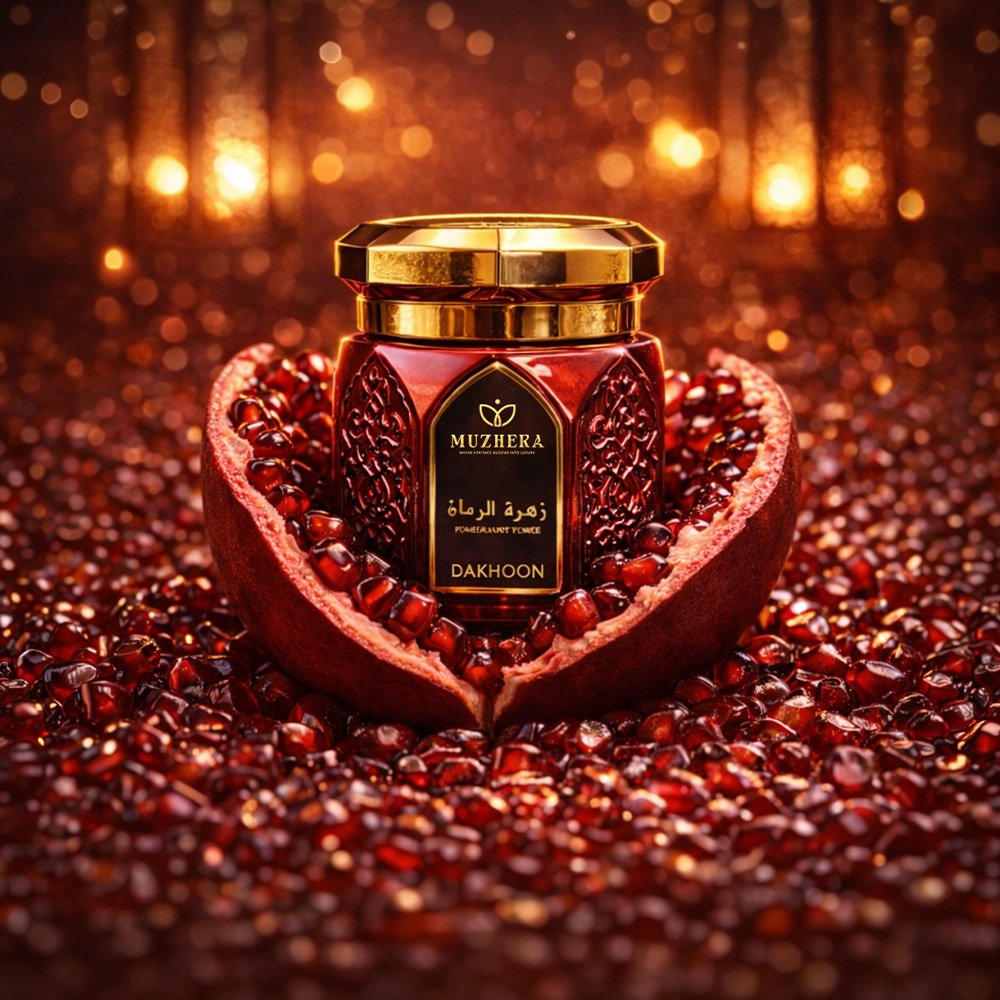
Muzhera was created to honour this heritage in a modern way. Pair Zaharat Al Rumman Dukhoon, Love Silk Touch Mukhamria, and a signature Eau de Parfum like Al Reem, Eva, Al Ameer, or Highness to experience the full Arabic fragrance ritual — where heritage blooms into luxury.